
The rare defect where one miss means a recall.
The defects that cause recalls are the ones you have the fewest photos of. We create them — already labelled, in a private, isolated setup.
Medical devices & pharma — our strongest, cleanest published results, in a private and isolated environment.
On one published pharmaceutical example, the model went from catching 46% to 81% of a hard defect — without raising false alarms on good product. Placebo-controlled, on real photos.
The missing photos, already labelled.
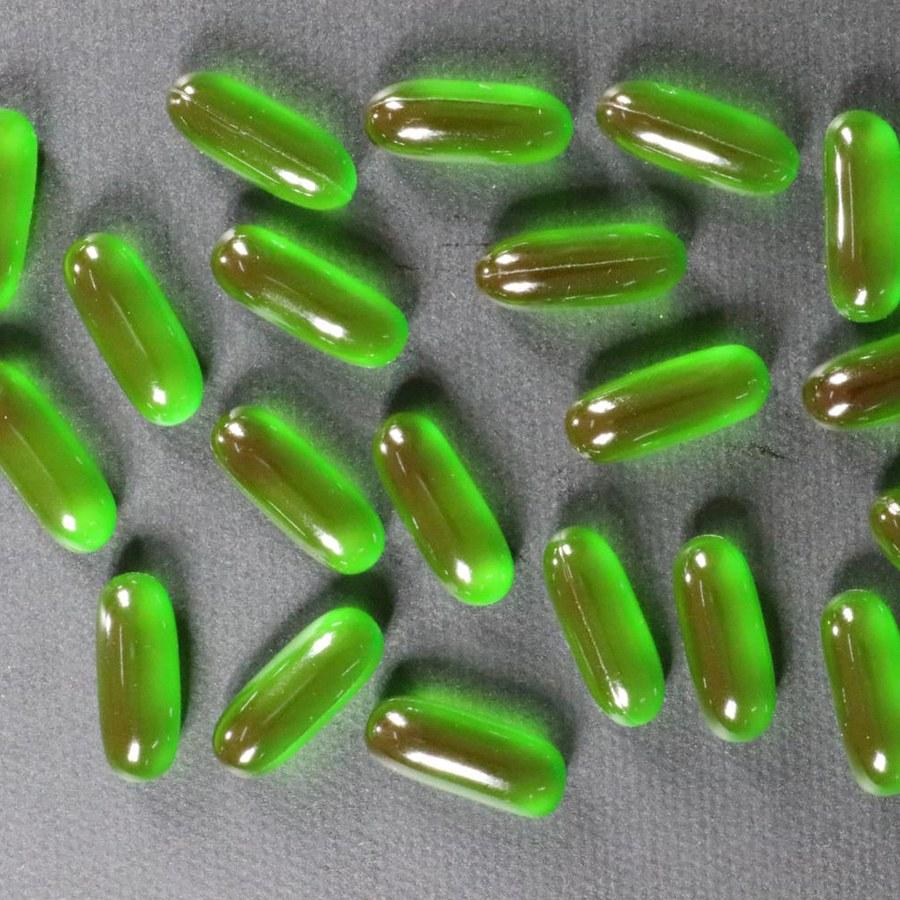
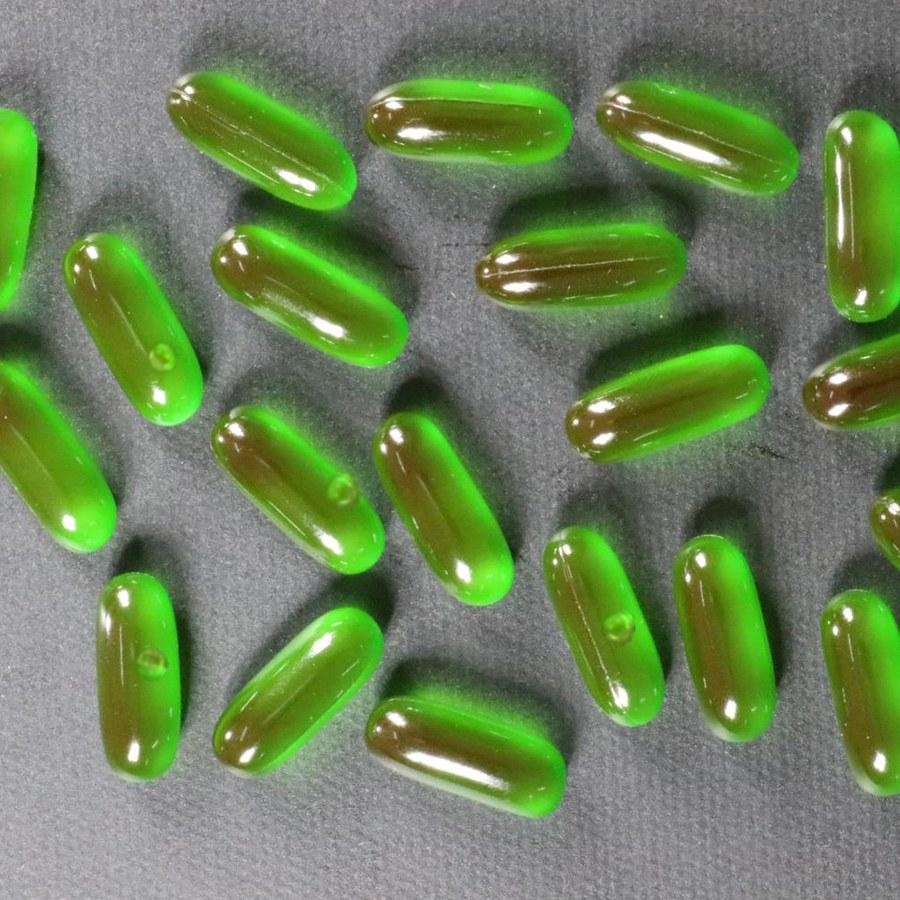
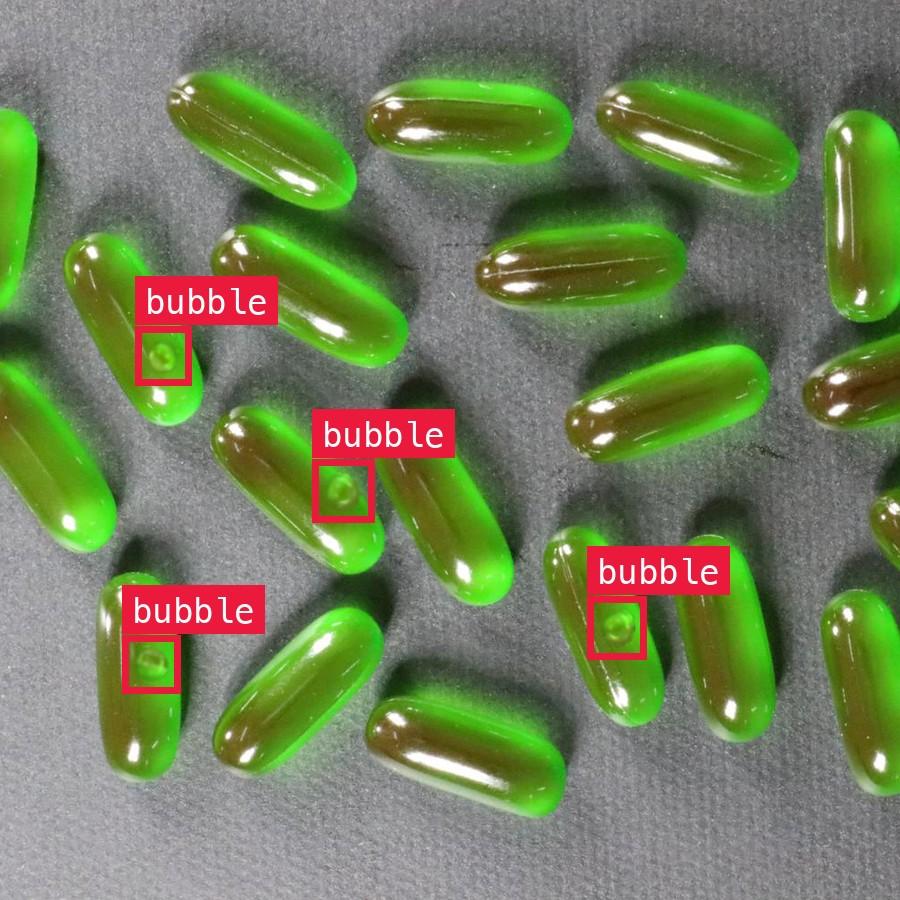
Real, already-labelled training images generated by Synthgen: clean capsules (left), the same scene with four bubble defects added — each placed inside its capsule at true scale, lit to match (middle) — every one auto-labelled as it's made (right). No hand-annotation.
Source imagery: VisA dataset (Amazon), CC BY 4.0. Synthetic images + labels by Synthgen.
The two-week proof.
Send us the defect class behind your recall risk — the rare one. Within two weeks you have a measured answer — your system today vs. the same system trained with our photos, side by side on your own held-out images, in a private and isolated environment. You name the bar before we start, and you pay only if we clear it. Your images are never shared, never reused, and never used to train anything but your own test.
Pay on results — you set the bar, we clear it or you don’t pay. No free pilots, no free work: just a measured answer.
The old way, retired.
Measured, not promised.
of a hard defect caught on a published pharmaceutical example — false alarms held flat.
of defects found in a pass/fail anomaly check on capsules — same model, our photos added.
max, to a measured answer on your own data — can synthetic data move your number, and by how much.
Results are per defect class — classification and pass/fail anomaly checks, not whole-line averages — placebo-controlled on real held-out photos. Pharma and medical examples are the cleanest cells in our published benchmark. You set the bar; we measure against it.
Honest in both directions.
Two axes, not one.
Catch-rate alone can lie — a model can “find” more defects simply by flagging good parts. We report defect recall and false calls on your good parts together, so the number is honest in both directions.
Placebo-controlled, always.
Anyone can show a number that flatters. Every result we publish has survived placebo-controlled testing, repeated run after run — if the gain isn’t real, it doesn’t ship.
We’d rather say no.
A 10-minute fit check screens every defect class before we run anything. When a class can’t win, we decline it before you spend a cent — and we have, in writing.
Two weeks, one answer.
You send whatever photos you have of the defect — a handful is enough to start; rare is the point — plus a couple dozen photos of good parts. The good ones teach the model what not to flag.
~1–2 hrs of your engineer
A short fit check. We only run tests we expect to win — and say so if we don’t.
a short call
We generate the photos, label them during generation, and train both versions identically.
nothing from you
A measured answer on your own held-out photos: the lift, side by side — or an honest “this one isn’t a fit.”
30-min readout
A win becomes a paid pilot — a one-month engagement at minimum — then the next defect class, line, or plant.
you decide
Close the data gap behind your recall risk.
Two weeks. Your products. Your number — privately.
Private & isolated · your images are never shared or reused · synthgen.co
Published results are per-class classification results (“which defect type” / “defect vs good”) on frozen real-image test sets — ranges, not maxima; never a whole-line average; placebo-controlled and independently repeated. Your number is the one we produce on your own data, against a bar you set before we start.